Skiing in Svalbard for 8 Days
Christian Ramsgaard – Founder of Diabetic Adventurers Club
Type 1 diabetic since 2000 · Arctic ski expeditions · Hunter · Published cookbook author
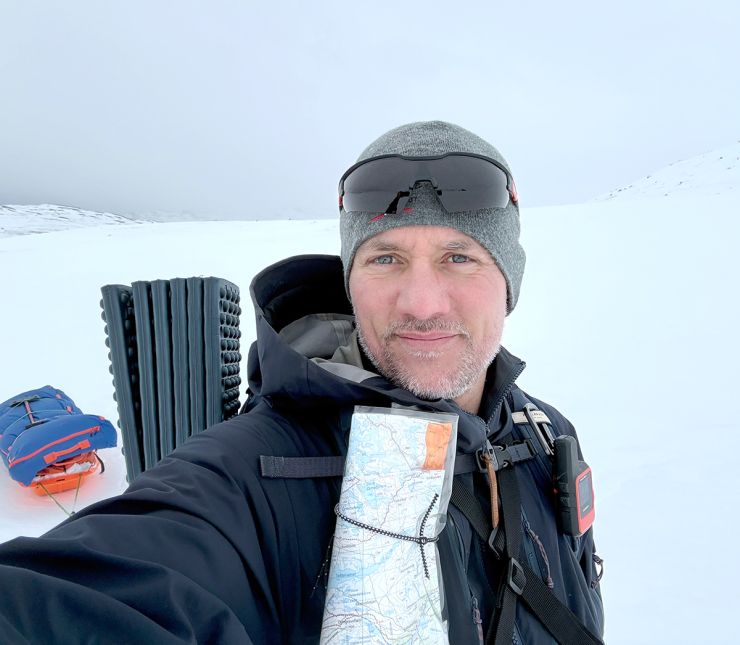
| T1D since | Coldest expedition | Longest pulk trip | Books published |
|---|---|---|---|
| 2000 | –25°C, Svalbard | 8 days | 3 (+ Swedish & German editions) |
I refuse to be defined by Type 1 diabetes
I was born in 1978 and diagnosed with Type 1 diabetes on an August day in 2000, when I was 22. Since then I’ve learned that diabetes doesn’t decide where you can go. Preparation does.
I founded Diabetic Adventurers Club because I couldn’t find practical, first-hand advice on managing Type 1 in extreme environments. How do you keep insulin from freezing at –20°C? How do you adjust a pump for eight hours of skiing with a sled? There were very few answers out there, so I started testing, documenting and sharing what I learned.
Whether it’s a weekend kayak trip or two weeks in the Arctic, everything takes extra planning with T1D. For me, the preparation is part of the adventure: training, testing gear and planning for the worst case.
My expeditions
- Svalbard – 8-day pulk ski expedition 2024. Crossing Svalbard on skis while pulling a sled, in temperatures down to –25°C. I kept my insulin pens in a handmade pouch against my body, under the innermost wool layer.
- Alta, Norway – cold-weather test expedition 2024. Six days at –17°C, testing whether an insulated flight case could protect insulin in severe frost before I committed to Svalbard.
- Hardangervidda, Norway – winter pulk trip 2026. Carried out with a dedicated pump profile developed with my diabetes clinic, using reduced basal rates, lower meal doses and adjusted correction factors.
- Avalanche course & ski touring in Norway. Randonnée and top-tour skiing, including formal avalanche safety training.
- Scuba diving in Puerto Rico 2024. Diving to 14 metres with Type 1, including how I handled my Tandem pump underwater.
- Kayaking 2026.
How I manage Type 1 in the wild
Everything I write is based on what I’ve actually done, including what didn’t work.
- Insulin pump since 2024: It took time before I trusted it. Today it gives me freedom: I wake up most mornings with a stable blood sugar, and I can let go of some of the constant control in daily life.
- Expedition pump profiles: Before every expedition I create a dedicated profile together with my diabetes clinic, with reduced basal rates, lower meal doses and adjusted correction factors, and I test it before departure.
- Insulin protection: Pens go in rigid sample containers from my doctor (unglamorous, but impact-proof and watertight), stored in a custom pouch close to my body. I always carry backup insulin (Levemir), spare needles, sensors and infusion sets.
- Hypo treatment: Glucose tablets. They’re fast and simple, and I know exactly how they work.
- Power in the cold: A solar panel on the pulk, a power bank, and devices charged inside my sleeping bag, because body heat keeps batteries alive.
- Safety: Garmin inReach Mini 2 (satellite SOS), map and compass, offline maps and Varsom for avalanche risk. Out there, there’s no signal and no Plan B unless you packed it yourself.
- Training: Strength training, running, cycling, and dragging car tyres to simulate pulling a pulk.
You can follow my current location live on my Garmin MapShare.
Beyond diabetes: hunting, food and publishing
I’ve held a hunting licence since 1996, and my passion for gastronomy goes back even further. Together with chef and butcher Erik Schwærter, I’ve written the Danish cookbook series DET’ HELT VILDT, published by A5 Forlag:
- Det’ helt vildt – Rådyr (roe deer). Bestseller with 6,000+ copies sold in Denmark, published in Swedish as WILD at HEART – Rådjur and in German by blv/HarperCollins (October 2026).
- Det’ helt vildt – Fasan (pheasant)
- Det’ helt vildt – Vildsvin (wild boar)
The books are available in Danish public libraries (bibliotek.dk).
I also run WILD at HEART, an international community for wild game cooking.
Professionally, I’m trained in advertising and work in marketing and communications.
Featured in
- TV 2 – Go’ morgen Danmark (10 November 2022). Guest chefs with Erik Schwærter, cooking braised wild boar shank with mushrooms, potatoes and gravy from Det’ helt vildt – Vildsvin. See the post
- Rubin Medical – “Mød Christian” (2026). Ambassador profile on living with Type 1 and using an insulin pump for adventures. Read the article (Danish)
Disclosure: I’m an ambassador for Rubin Medical, the Nordic distributor of Tandem insulin pumps. My experiences and opinions are my own.
How I write – and what I’m not
- Articles are based on my own expeditions and tests.
- Treatment adjustments, such as pump profiles, are always planned with my diabetes clinic. I share my approach, not a prescription.
- I’m not a doctor. Nothing on this site is medical advice. Always plan changes to your treatment with your own diabetes team.
Get in touch
- Email: christian@ramsgaard.com
- Instagram: Artfreak_and_hunter
- YouTube: Diabetic Adventurers Club
- LinkedIn: cramsgaard
Skiing in Svalbard for 8 Days - with T1
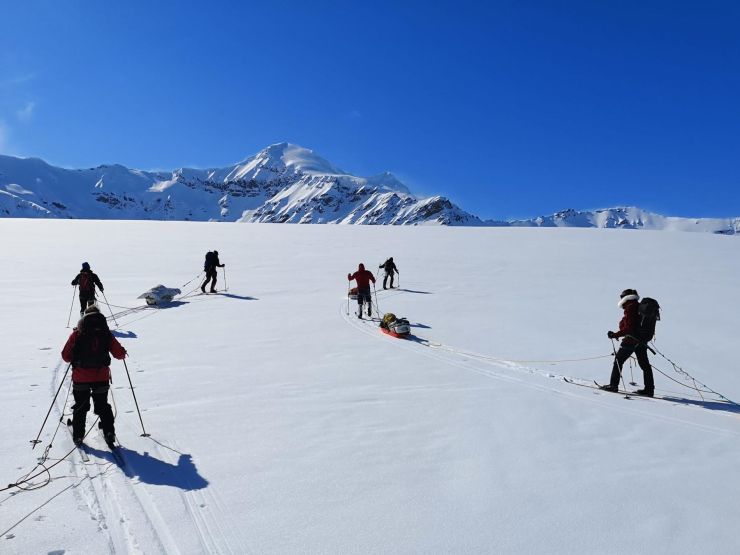
On April 5th, I embark on an arctic adventure to Svalbard, skiing with a pulk in temperatures dipping down to minus 20 degrees Celsius.
A crucial concern is ensuring that my insulin doesn't freeze. How do I store it correctly in such extreme conditions?
From my military experience, I recall a strap-in syringe holster capable of holding several syringes, roughly the size of an insulin pen. This seems like a good first step to carry insulin and use body heat to prevent it from freezing. However, there are challenges, such as irritation from having it too close to the body, especially with many hours of skiing each day.
Another solution might be a box with a heat source. For details on this, check out another blog post on the topic.
This blog post might also be interesting - SVALDBARD final tour
Adventure with T1D
Empowering Adventures: Thriving with Diabetes
"We believe that diabetes should not prevent you from experiencing the world to the fullest. From climbing mountain peaks to exploring the most remote areas, our community is here to fuel your passion with motivation and practical advice."
Find us here too
Follow along on YouTube and Instagram for more adventures, real moments, and practical tips for life with diabetes — outdoors and in everyday life.