Avalanche Course in Norway
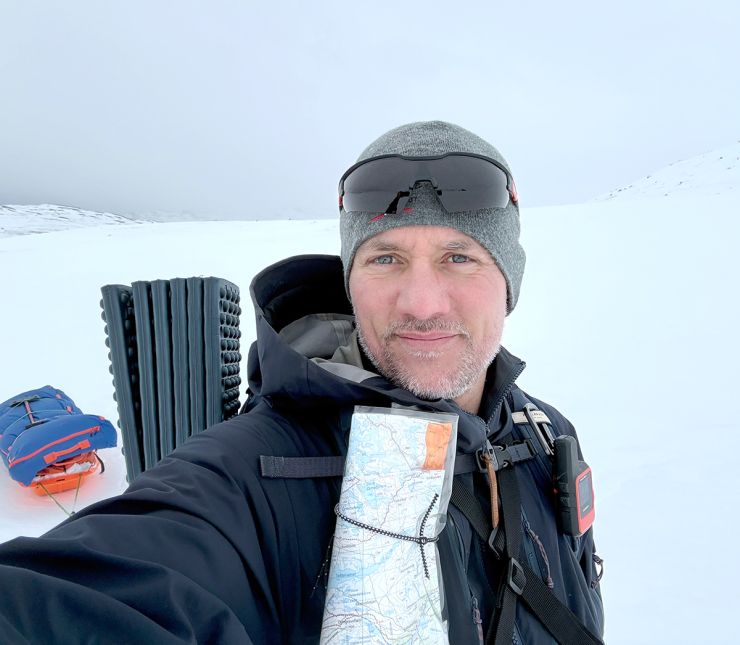
Christian Ramsgaard – Founder of Diabetic Adventurers Club
Type 1 diabetic since 2000 · Arctic ski expeditions · Hunter · Published cookbook author
| T1D since | Coldest expedition | Longest pulk trip | Books published |
|---|---|---|---|
| 2000 | –25°C, Svalbard | 8 days | 3 (+ Swedish & German editions) |
I refuse to be defined by Type 1 diabetes
I was born in 1978 and diagnosed with Type 1 diabetes on an August day in 2000, when I was 22. Since then I’ve learned that diabetes doesn’t decide where you can go. Preparation does.
I founded Diabetic Adventurers Club because I couldn’t find practical, first-hand advice on managing Type 1 in extreme environments. How do you keep insulin from freezing at –20°C? How do you adjust a pump for eight hours of skiing with a sled? There were very few answers out there, so I started testing, documenting and sharing what I learned.
Whether it’s a weekend kayak trip or two weeks in the Arctic, everything takes extra planning with T1D. For me, the preparation is part of the adventure: training, testing gear and planning for the worst case.
My expeditions
- Svalbard – 8-day pulk ski expedition 2024. Crossing Svalbard on skis while pulling a sled, in temperatures down to –25°C. I kept my insulin pens in a handmade pouch against my body, under the innermost wool layer.
- Alta, Norway – cold-weather test expedition 2024. Six days at –17°C, testing whether an insulated flight case could protect insulin in severe frost before I committed to Svalbard.
- Hardangervidda, Norway – winter pulk trip 2026. Carried out with a dedicated pump profile developed with my diabetes clinic, using reduced basal rates, lower meal doses and adjusted correction factors.
- Avalanche course & ski touring in Norway. Randonnée and top-tour skiing, including formal avalanche safety training.
- Scuba diving in Puerto Rico 2024. Diving to 14 metres with Type 1, including how I handled my Tandem pump underwater.
- Kayaking 2026.
How I manage Type 1 in the wild
Everything I write is based on what I’ve actually done, including what didn’t work.
- Insulin pump since 2024: It took time before I trusted it. Today it gives me freedom: I wake up most mornings with a stable blood sugar, and I can let go of some of the constant control in daily life.
- Expedition pump profiles: Before every expedition I create a dedicated profile together with my diabetes clinic, with reduced basal rates, lower meal doses and adjusted correction factors, and I test it before departure.
- Insulin protection: Pens go in rigid sample containers from my doctor (unglamorous, but impact-proof and watertight), stored in a custom pouch close to my body. I always carry backup insulin (Levemir), spare needles, sensors and infusion sets.
- Hypo treatment: Glucose tablets. They’re fast and simple, and I know exactly how they work.
- Power in the cold: A solar panel on the pulk, a power bank, and devices charged inside my sleeping bag, because body heat keeps batteries alive.
- Safety: Garmin inReach Mini 2 (satellite SOS), map and compass, offline maps and Varsom for avalanche risk. Out there, there’s no signal and no Plan B unless you packed it yourself.
- Training: Strength training, running, cycling, and dragging car tyres to simulate pulling a pulk.
You can follow my current location live on my Garmin MapShare.
Beyond diabetes: hunting, food and publishing
I’ve held a hunting licence since 1996, and my passion for gastronomy goes back even further. Together with chef and butcher Erik Schwærter, I’ve written the Danish cookbook series DET’ HELT VILDT, published by A5 Forlag:
- Det’ helt vildt – Rådyr (roe deer). Bestseller with 6,000+ copies sold in Denmark, published in Swedish as WILD at HEART – Rådjur and in German by blv/HarperCollins (October 2026).
- Det’ helt vildt – Fasan (pheasant)
- Det’ helt vildt – Vildsvin (wild boar)
The books are available in Danish public libraries (bibliotek.dk).
I also run WILD at HEART, an international community for wild game cooking.
Professionally, I’m trained in advertising and work in marketing and communications.
Featured in
- TV 2 – Go’ morgen Danmark (10 November 2022). Guest chefs with Erik Schwærter, cooking braised wild boar shank with mushrooms, potatoes and gravy from Det’ helt vildt – Vildsvin. See the post
- Rubin Medical – “Mød Christian” (2026). Ambassador profile on living with Type 1 and using an insulin pump for adventures. Read the article (Danish)
Disclosure: I’m an ambassador for Rubin Medical, the Nordic distributor of Tandem insulin pumps. My experiences and opinions are my own.
How I write – and what I’m not
- Articles are based on my own expeditions and tests.
- Treatment adjustments, such as pump profiles, are always planned with my diabetes clinic. I share my approach, not a prescription.
- I’m not a doctor. Nothing on this site is medical advice. Always plan changes to your treatment with your own diabetes team.
Get in touch
- Email: christian@ramsgaard.com
- Instagram: Artfreak_and_hunter
- YouTube: Diabetic Adventurers Club
- LinkedIn: cramsgaard
Avalanche Course in Norway
– A Trip with Challenges and Solutions
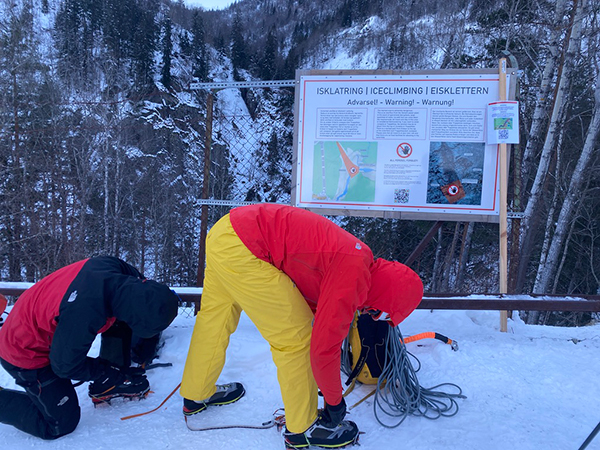
Diabetes does not have to be a barrier to obtaining technically demanding outdoor certifications. At the beginning of February, I embarked on a four-day avalanche course in Norway. The goal was to improve my ability to read and interpret avalanche conditions, allowing me to undertake ski touring trips either alone or with a partner – always with safety as the top priority.
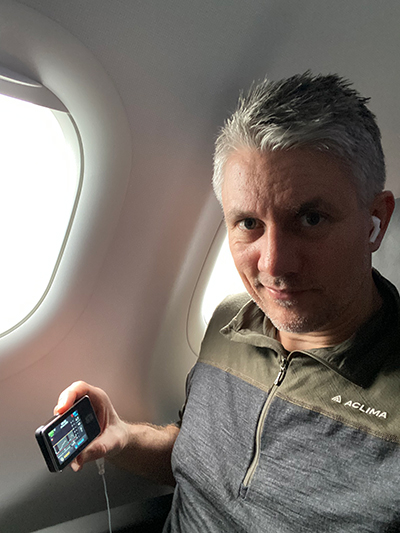
To get to Norway, I chose to fly, as it was a more economical option than driving. However, the flight started with a minor challenge – I accidentally sat on my CGM sensor, causing it to loosen and fail. As soon as I picked up my rental car upon arrival, I had to quickly get to the back of the car and replace the sensor. Whether this was an omen for the rest of the trip, I don’t know, but at least I managed to change my sensor and was ready to move on.
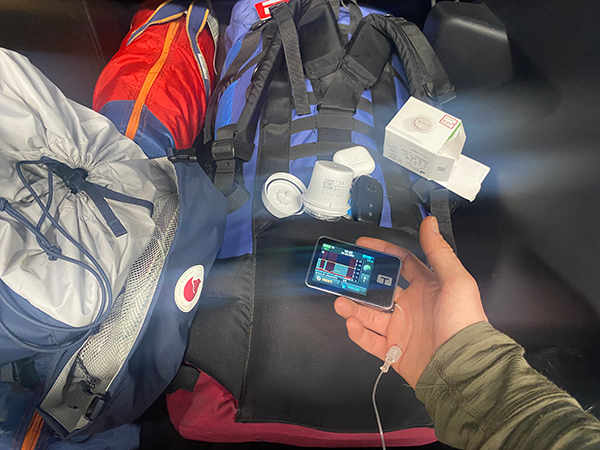
To ensure my diabetes equipment functioned optimally during the course, I had to carefully plan its placement. I chose to place my new CGM sensor under my left arm. My insulin pump infusion set was placed on the right side of my abdomen. This setup was strategically chosen because, during the avalanche course, I also needed to carry an avalanche transceiver, which is traditionally worn on the left side of the body. I wanted to avoid any interference between my insulin pouch and the transceiver or create issues with my infusion set.
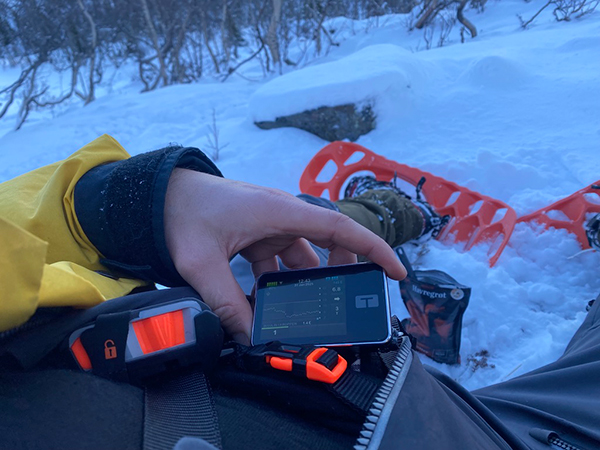
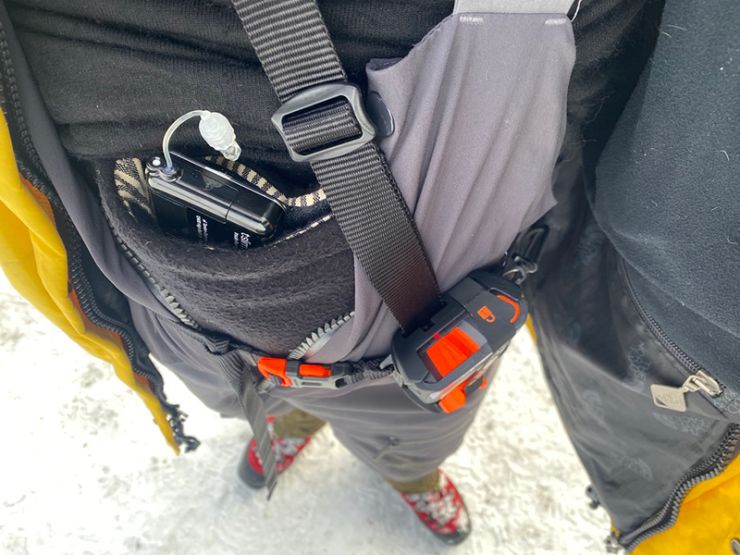
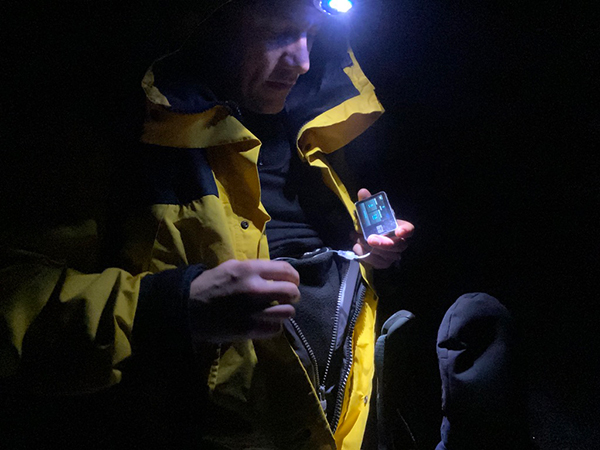
To optimize my insulin pump placement, I kept it in the chest-mounted pack. From there, the tubing could run up along my body. I chose to position the infusion set so the tubing pointed upward instead of downward. This way, I could route the tubing through the collar and into my pack. As seen in the pictures, this solution worked perfectly, and I am really pleased with my setup. It kept the tubing frost-free, and at no point was I worried about freezing.
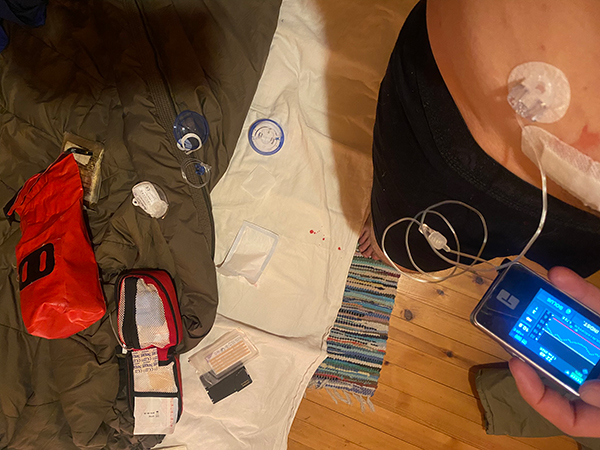
On the second evening, it was time to change my infusion set. As I inserted the needle into my skin, I immediately felt something was off – it hurt. I tried to ignore it and got into my sleeping bag, but the pain persisted. Eventually, I had to remove the set and place a new one. As I pulled off the old one, a stream of blood shot out, and I had to quickly press a finger against the wound while scrambling to find a large bandage with my other hand. I didn’t entirely avoid making a mess, but after a brief moment of chaos, I was finally able to settle back into my sleeping bag.
A Trip to Gaustatoppen
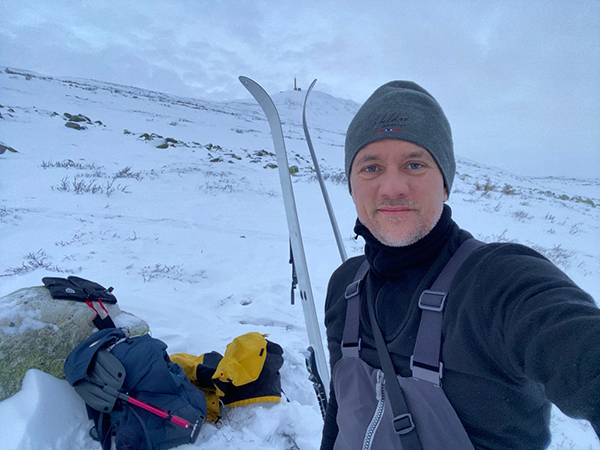
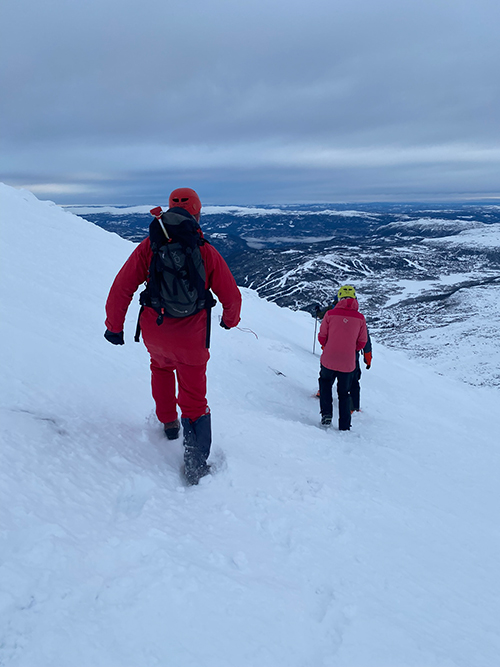
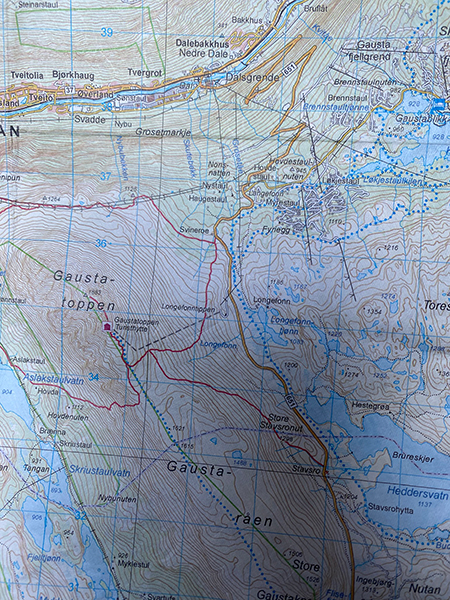
On day four, it was time for the big challenge – a trip up Gaustatoppen and a descent on backcountry skis. Gaustatoppen in Rjukan stands at 1,883 meters, and although backcountry skis resemble cross-country skis with steel edges, they are not particularly suited for downhill skiing. The task was not only to descend safely but also to plan the route with avalanche risk in mind and avoid potential avalanche run-out zones. The rocky surface and challenging snow conditions made the ski descent one of the toughest tasks of the course, but it was an invaluable experience where all avalanche theories and safety principles were put to the test.
Food on the Course
As standard equipment, I carried multiple packs of glucose tablets and muesli bars – both in my thigh pocket and chest pocket – ensuring I always had quick access to energy, even in extreme cold.
Read more about the food in the very cold areas
I experienced two alarms during the trip, both occurring during intense physical exertion. Fortunately, my glucose supplies were well-placed and worked exactly as planned. I also had an extra supply in my backpack in case of emergency.
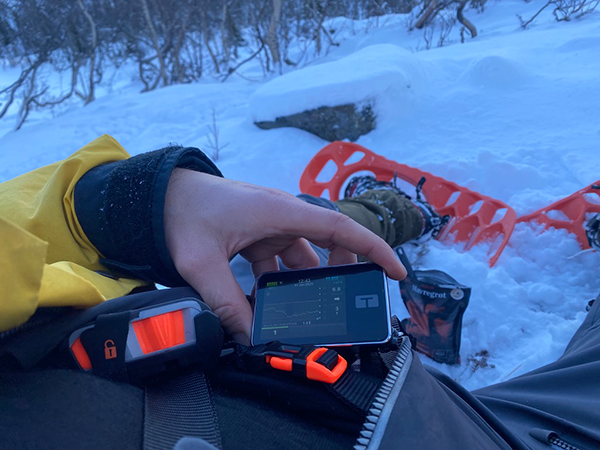
In cold environments, I only carry solid glucose sources. Juice and gels freeze quickly and become unusable, and even vacuum-packed rye bread stored in my chest pocket has frozen solid and needed to be thawed like ice.
For lunch, I opted for freeze-dried meal packs, as they are lightweight and allow me to accurately calculate carbohydrate intake. Additionally, having a hot meal in the snow was a welcome comfort.
First Cold Adventure with an Insulin Pump
As previously described, my setup worked really well, with the pump stored in the specially made pouch I had customized for my Svalbard trip last year. Perhaps the pouch was a bit large for the small pump, and smaller alternatives could likely be found, but it worked fine.
To ensure I could hear the alarms, I connected my phone to the sensor, as it was difficult to hear the pump’s alerts when it was inside the pouch and under two layers of wool clothing.
During physically demanding sections, such as the two-hour crossing over the mountain, I switched my pump to the exercise profile, which worked excellently. It maintained stable blood sugar levels, and I only went above my personal red line, set at 12.5 mmol, a few times.
Course Completion and Future Adventures
I passed the course. Not that it was difficult to pass, but I now feel much better equipped to make informed decisions regarding route selection and to identify dangerous areas that I, as a skier, should avoid. If an accident were to occur, I now have the tools to locate individuals and groups in an avalanche. Now, new adventures await with ski touring and randonée skiing!
More about this trip - read here
This blog post might also be interesting - Facing the Avalanche

About the Author
Written by Christian
Christian was born in 1978 and has been living boldly with type 1 diabetes since 2000. He refuses to be defined by his condition and is on a mission to conquer the highest mountains, explore the deepest caverns, cross scorching deserts, and face the coldest plains. His journeys are not just personal challenges — they are shared experiences meant to inspire and guide others living with T1D who dream of exploring the wilder parts of the world.
Christian finds strength in the global community of Type 1 adventurers who continuously push boundaries — both geographic and personal.
Adventure with T1D
Empowering Adventures: Thriving with Diabetes
"We believe that diabetes should not prevent you from experiencing the world to the fullest. From climbing mountain peaks to exploring the most remote areas, our community is here to fuel your passion with motivation and practical advice."
Find us here too
Follow along on YouTube and Instagram for more adventures, real moments, and practical tips for life with diabetes — outdoors and in everyday life.