Top Tourski in Norway
Christian Ramsgaard – Founder of Diabetic Adventurers Club
Type 1 diabetic since 2000 · Arctic ski expeditions · Hunter · Published cookbook author
| T1D since | Coldest expedition | Longest pulk trip | Books published |
|---|---|---|---|
| 2000 | –25°C, Svalbard | 8 days | 3 (+ Swedish & German editions) |
I refuse to be defined by Type 1 diabetes
I was born in 1978 and diagnosed with Type 1 diabetes on an August day in 2000, when I was 22. Since then I’ve learned that diabetes doesn’t decide where you can go. Preparation does.
I founded Diabetic Adventurers Club because I couldn’t find practical, first-hand advice on managing Type 1 in extreme environments. How do you keep insulin from freezing at –20°C? How do you adjust a pump for eight hours of skiing with a sled? There were very few answers out there, so I started testing, documenting and sharing what I learned.
Whether it’s a weekend kayak trip or two weeks in the Arctic, everything takes extra planning with T1D. For me, the preparation is part of the adventure: training, testing gear and planning for the worst case.
My expeditions
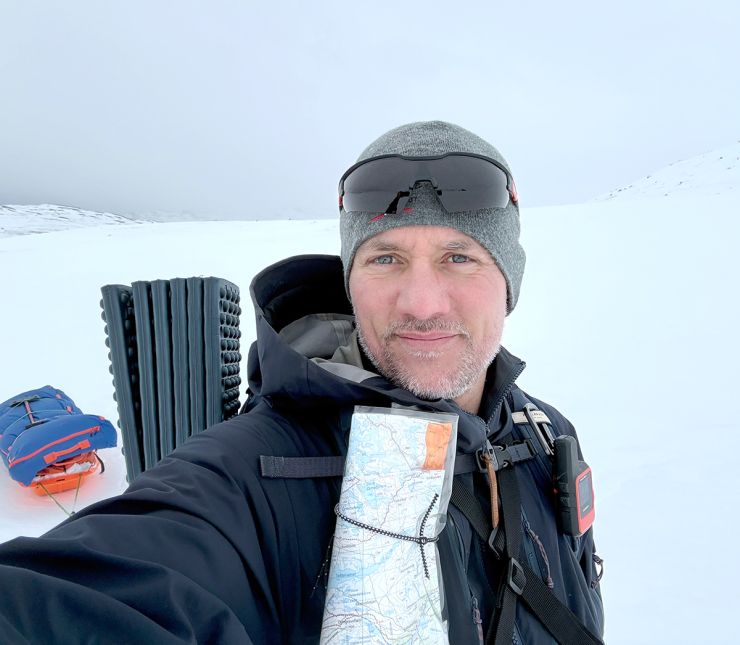
- Svalbard – 8-day pulk ski expedition 2024. Crossing Svalbard on skis while pulling a sled, in temperatures down to –25°C. I kept my insulin pens in a handmade pouch against my body, under the innermost wool layer.
- Alta, Norway – cold-weather test expedition 2024. Six days at –17°C, testing whether an insulated flight case could protect insulin in severe frost before I committed to Svalbard.
- Hardangervidda, Norway – winter pulk trip 2026. Carried out with a dedicated pump profile developed with my diabetes clinic, using reduced basal rates, lower meal doses and adjusted correction factors.
- Avalanche course & ski touring in Norway. Randonnée and top-tour skiing, including formal avalanche safety training.
- Scuba diving in Puerto Rico 2024. Diving to 14 metres with Type 1, including how I handled my Tandem pump underwater.
- Kayaking 2026.
How I manage Type 1 in the wild
Everything I write is based on what I’ve actually done, including what didn’t work.
- Insulin pump since 2024: It took time before I trusted it. Today it gives me freedom: I wake up most mornings with a stable blood sugar, and I can let go of some of the constant control in daily life.
- Expedition pump profiles: Before every expedition I create a dedicated profile together with my diabetes clinic, with reduced basal rates, lower meal doses and adjusted correction factors, and I test it before departure.
- Insulin protection: Pens go in rigid sample containers from my doctor (unglamorous, but impact-proof and watertight), stored in a custom pouch close to my body. I always carry backup insulin (Levemir), spare needles, sensors and infusion sets.
- Hypo treatment: Glucose tablets. They’re fast and simple, and I know exactly how they work.
- Power in the cold: A solar panel on the pulk, a power bank, and devices charged inside my sleeping bag, because body heat keeps batteries alive.
- Safety: Garmin inReach Mini 2 (satellite SOS), map and compass, offline maps and Varsom for avalanche risk. Out there, there’s no signal and no Plan B unless you packed it yourself.
- Training: Strength training, running, cycling, and dragging car tyres to simulate pulling a pulk.
You can follow my current location live on my Garmin MapShare.
Beyond diabetes: hunting, food and publishing
I’ve held a hunting licence since 1996, and my passion for gastronomy goes back even further. Together with chef and butcher Erik Schwærter, I’ve written the Danish cookbook series DET’ HELT VILDT, published by A5 Forlag:
- Det’ helt vildt – Rådyr (roe deer). Bestseller with 6,000+ copies sold in Denmark, published in Swedish as WILD at HEART – Rådjur and in German by blv/HarperCollins (October 2026).
- Det’ helt vildt – Fasan (pheasant)
- Det’ helt vildt – Vildsvin (wild boar)
The books are available in Danish public libraries (bibliotek.dk).
I also run WILD at HEART, an international community for wild game cooking.
Professionally, I’m trained in advertising and work in marketing and communications.
Featured in
- TV 2 – Go’ morgen Danmark (10 November 2022). Guest chefs with Erik Schwærter, cooking braised wild boar shank with mushrooms, potatoes and gravy from Det’ helt vildt – Vildsvin. See the post
- Rubin Medical – “Mød Christian” (2026). Ambassador profile on living with Type 1 and using an insulin pump for adventures. Read the article (Danish)
Disclosure: I’m an ambassador for Rubin Medical, the Nordic distributor of Tandem insulin pumps. My experiences and opinions are my own.
How I write – and what I’m not
- Articles are based on my own expeditions and tests.
- Treatment adjustments, such as pump profiles, are always planned with my diabetes clinic. I share my approach, not a prescription.
- I’m not a doctor. Nothing on this site is medical advice. Always plan changes to your treatment with your own diabetes team.
Get in touch
- Email: christian@ramsgaard.com
- Instagram: Artfreak_and_hunter
- YouTube: Diabetic Adventurers Club
- LinkedIn: cramsgaard
Planning Energy Needs and Insulin Pump Functionality in Cold Environments
At the end of January, I will embark on a top ski touring course in Norway. As a person with diabetes using a Tandem t:slim X2 insulin pump, I have carefully considered how to manage my diabetes in the extreme conditions ahead. From adjusting insulin doses to ensuring the pump has sufficient power, I aim to share my experiences and strategies for tackling this unique challenge.
Considerations for a Top Tourski Tour in Norway Embarking on a top tourski tour in Norway's challenging winter environment requires careful consideration, especially since this is my first time navigating such extreme conditions with an insulin pump.
Here are the areas I have focused on in my preparations:
Insulin Adjustment: I have been in close dialogue with my diabetes nurse and doctor to ensure I am well-informed about how cold temperatures and sustained physical activity may impact my body and alter my insulin needs.
Infusion Set and Temperature Control:
It is crucial for me to ensure that my infusion set functions correctly in extreme conditions.
Reliable Charging Solutions:
My Tandem t:slim X2 pump requires USB charging, so I have prioritized ensuring a stable power source.
Managing My Tandem Insulin Pump in the Cold
My Tandem t:slim X2 insulin pump is equipped with a rechargeable lithium-polymer battery, which can typically last up to seven days under normal conditions. However, cold temperatures can reduce battery efficiency, and in near-freezing conditions, I anticipate a 20-30% reduction in battery life. Since I haven’t used the pump in such cold environments before, I need to be thoroughly prepared.
To ensure optimal functionality, I keep the pump close to my body in an insulated pouch.
For more insights, see my blog post about preparations for the Svalbard trip.
I am also bringing a 10,000 mAh power bank, which in theory could provide approximately 20 full charges for the pump (this estimate doesn’t account for reduced efficiency in cold temperatures). Additionally, I have a solar panel to recharge the power bank.
Carbohydrate Intake During Intense Physical Activity
For a 5-6 hour ascent where most of the effort is uphill, I expect to burn around 2970 kcal. This energy expenditure requires approximately 874 grams of carbohydrate intake.
To make this practical, I calculated that this corresponds to about 58 slices of rye bread, assuming each slice contains 15 grams of carbohydrates. Alternatively, I can supplement with energy bars, gels, or fruit to reduce weight and make it easier to eat on the move. My experience from the Svalbard trip taught me that vacuum-packed rye bread can freeze solid in extreme conditions.
|
Carbohydrate Intake and Physical Activity
|
Carbohydrates in Practice 1 gram of carbohydrate provides approximately 4 kcal. For prolonged physical activity, a steady intake of 30-60 grams of carbohydrates per hour is recommended. |
This blog post might also be interesting - Avalanche Course in Norway

About the Author
Written by Christian
Christian was born in 1978 and has been living boldly with type 1 diabetes since 2000. He refuses to be defined by his condition and is on a mission to conquer the highest mountains, explore the deepest caverns, cross scorching deserts, and face the coldest plains. His journeys are not just personal challenges — they are shared experiences meant to inspire and guide others living with T1D who dream of exploring the wilder parts of the world.
Christian finds strength in the global community of Type 1 adventurers who continuously push boundaries — both geographic and personal.
Projects
Empowering Adventures: Thriving with Diabetes
"We believe that diabetes should not prevent you from experiencing the world to the fullest. From climbing mountain peaks to exploring the most remote areas, our community is here to fuel your passion with motivation and practical advice."
Find us here too
Follow along on YouTube and Instagram for more adventures, real moments, and practical tips for life with diabetes — outdoors and in everyday life.